
"Restoring Sanity" means restoring neutrality
Trump had an opportunity to help repair public trust in federal institutions. He squandered it on provoking Progressive outrage.

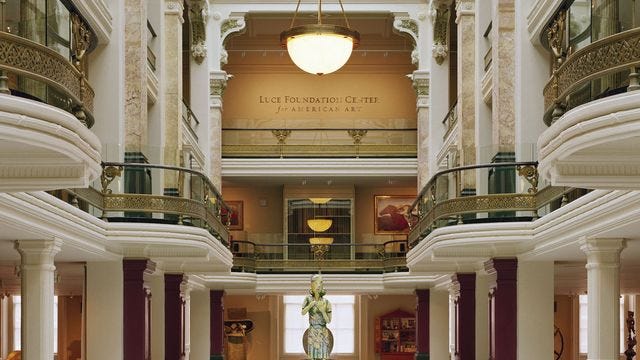
On Thursday, President Trump signed an executive order entitled "Restoring Truth and Sanity to American History." The order aims to counteract the narrative of America as “inherently racist, sexist, oppressive, or otherwise irredeemably flawed,” by focusing on our nation’s “unparalleled legacy” of advancing personal liberty and “human happiness.” This shift in focus is to be accomplished by restoring monuments that have been removed or damaged in the past five years, and by directing federal entities to remove what the administration describes as "divisive" and "anti-American" content from federally-owned museums and national parks.
The first step here isn’t really objectionable. The order looks to restore monuments, memorials and statues "that have been improperly removed or changed…to perpetuate a false revision of history or improperly minimize or disparage certain historical figures or events." Presumably this would include statues of the founding fathers toppled by student protesters during the summer of 2020, for example, as well as Confederate monuments on federal land. This is an empty, entirely symbolic act, of course, just like removing or altering the monuments in the first place. But other than the stupidity and cost of tearing down and putting back up all these monuments every 4-8 years for the foreseeable future, there isn’t really much to complain about.
The problem begins with the removal of “divisive” and “anti-American” exhibits and content in the Smithsonian and other museums and parks. In Section 1 of the order, the administration offers up a few examples of the kind of thing they’re talking about. An exhibit at the Smithsonian American Art Museum called “The Shape of Power: Stories of Race and American Sculpture,” is highlighted for language about “systems of power, privilege, and disenfranchisement” and for implying that race is not a biological concept. They also mention the famous “Whiteness” fiasco at the National Museum of African American History and Culture where ideals such as “hard work” were disparaged as artifacts of White culture and an upcoming exhibit at the Smithsonian American Women’s History Museum that celebrates trans-femme athletes.
These political stances are certainly divisive. But the Trump administration’s response is equally so. Progressives will interpret this renewed focus on American exceptionalism as “whitewashing” history, and they will be partially correct. Then when the pendulum of power shifts back to the Progressive side, the equally Manichean narrative of America’s irredeemable racism and bigotry will return ten-fold. Of course, inspiring Progressive histrionics is the keystone of Trump’s entire operation. The return of Woke moralizing to our museums and parks in a few years will keep the Trumpist wing of the GOP in business for a long time.
This is unfortunate. The president had an opportunity to truly start righting the ship of our public museums and monuments. When institutions take political stances, they lose public trust. They even lose trust among people who agree with the stance the institution takes. When the public senses that the people who make up the institution care more about their power within that institution than they do about the success of institution itself*, they lose faith in its mission. Think of the rapid erosion of trust in public health officials in 2020 following their declaration that protesting was acceptable because racism was a bigger “public health issue” than COVID.
The solution to ideological capture of public institutions is not capturing them in the name of another ideology. We don’t need new polemics of American virtue to replace the old polemics of American villainy. What we need is nuance. What we need is depoliticization. The Trump administration could have (should have) used this order to install curators and directors with a sense of the complexities of American life and history, both its triumphs and failures.
The principal problem with art about race and marginalization in America isn’t that it portrays our nation and its history negatively. It’s that it is often so one-note. As Kat Rosenfield put it: “bleak, boring, [and] painfully obvious.” Take this yawn-inducing sample from the “Shape of Power” exhibit mentioned in the executive order:
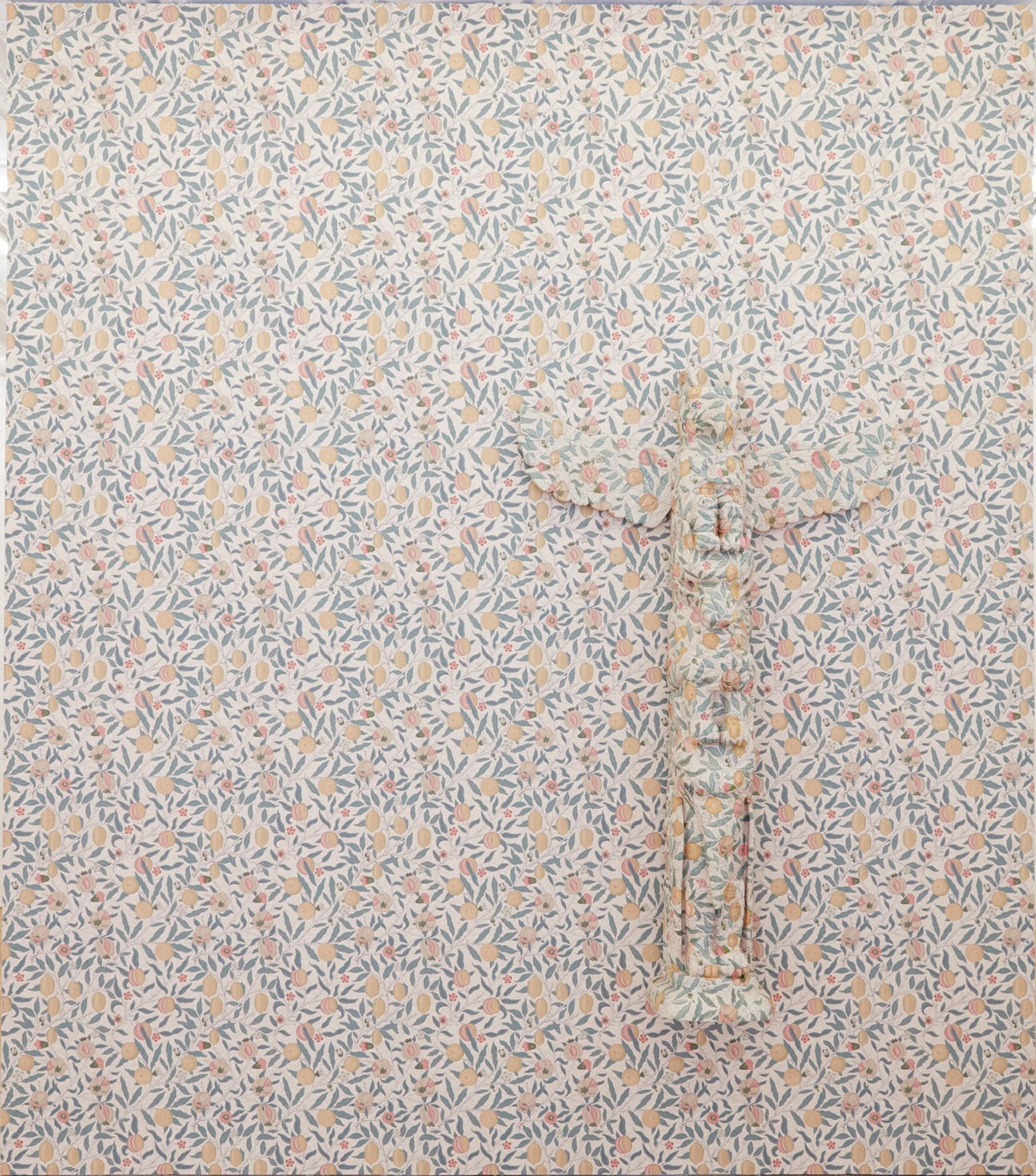
Oh, a totem pole that’s been wallpapered over to symbolize the erasure of Native culture and existence by White capitalism? From 2016? Excuse me while I lift my glasses and pinch the bridge of my nose with an exasperated sigh. Likewise, the failure of the Woke narrative of American history is its myopic focus on oppression and racial animus. The exhibits targeted by this executive order should be reimagined, the information presented in a more balanced and nuanced manner, the art selected to inspire actual engagement with complex realities, not banal “imaginaries.”
These institutions need leadership that will change course toward a pragmatist view of history, art and the American legacy. Just as many universities have begun to adopt neutrality statements, so should our public museums and parks. If we want to “Save Our Smithsonian,” the best way to do it is not to fight fire with fire, but to encourage neutrality and nuance.
*This is essentially the “Iron Law of Institutions,” coined by blogger Johnathan Schwartz.